Iron Ring
Save this feature with the run it belongs to.
Gauge Conditions
Approximate - nearest available gauge. Use as general reference only.
Photo
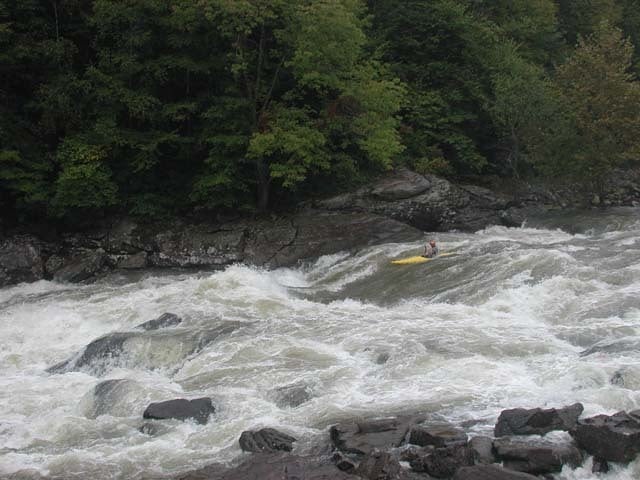
Description
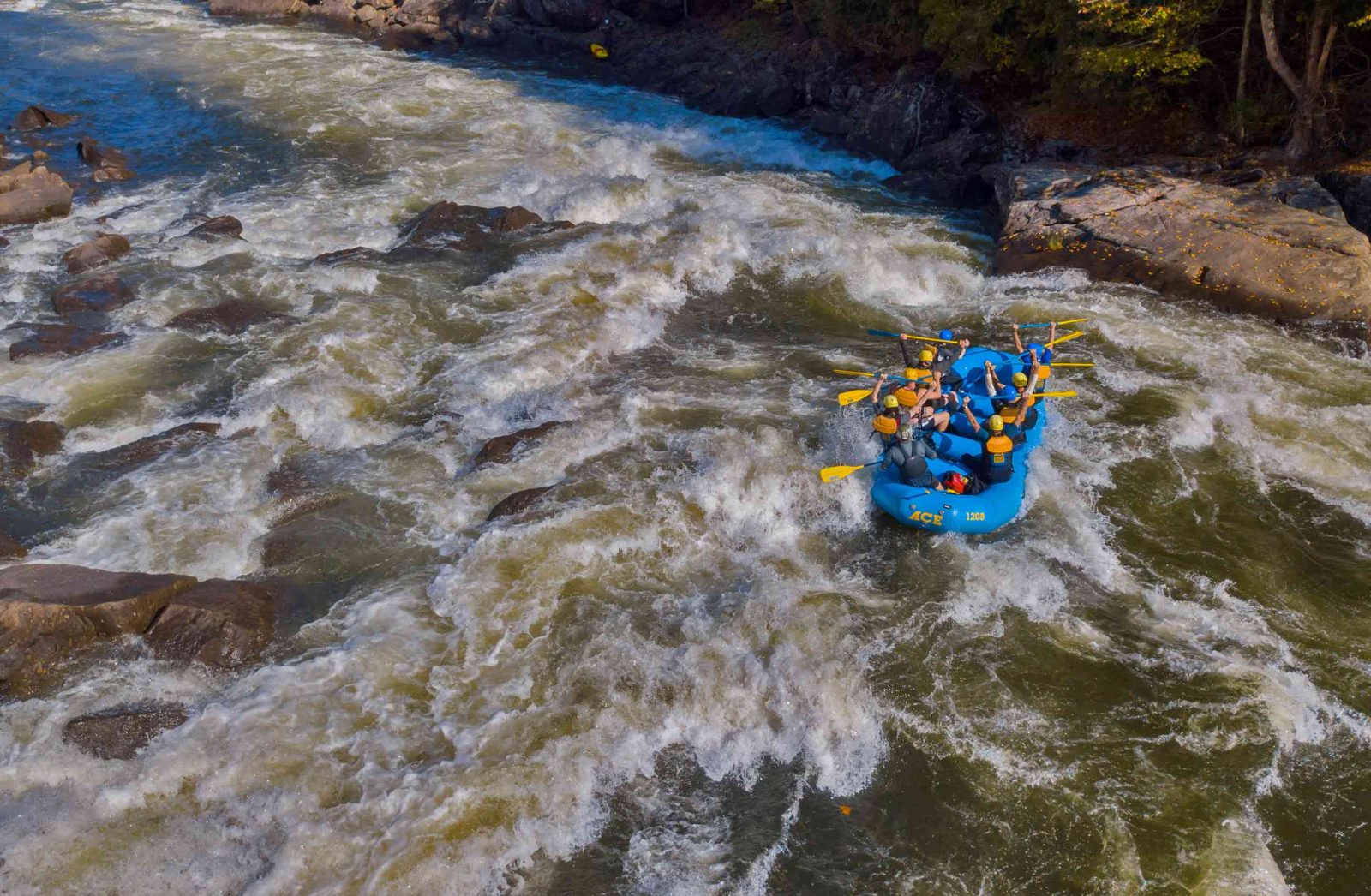
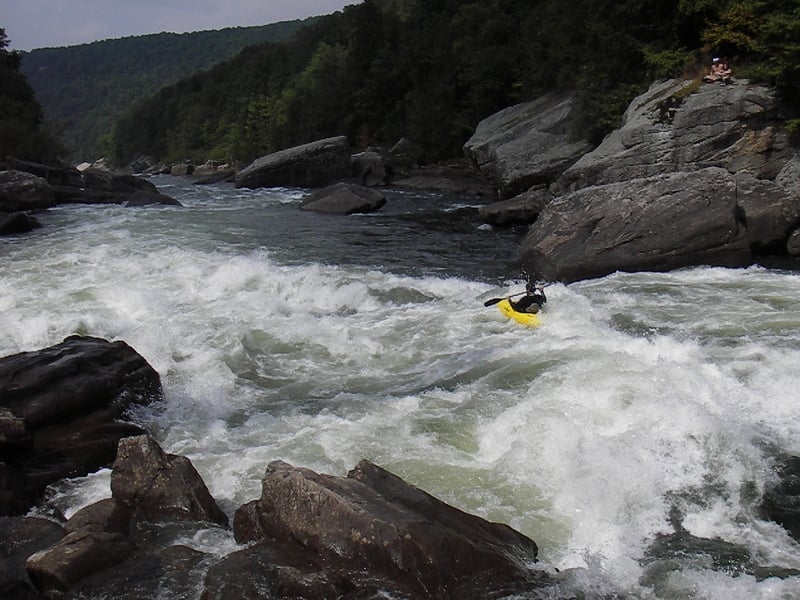
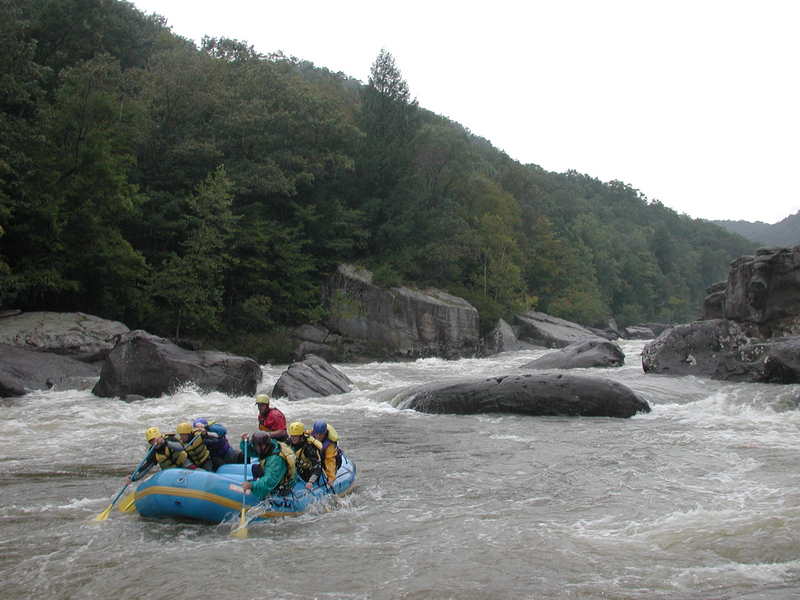
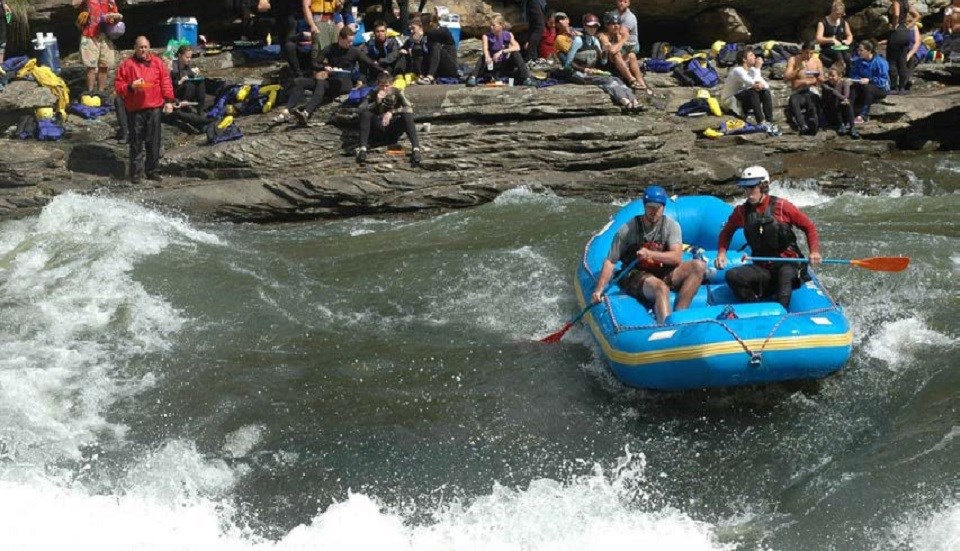
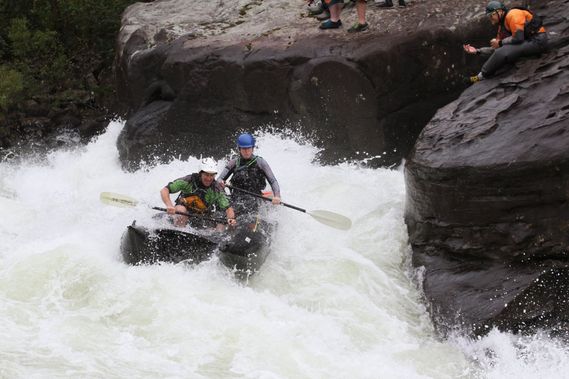
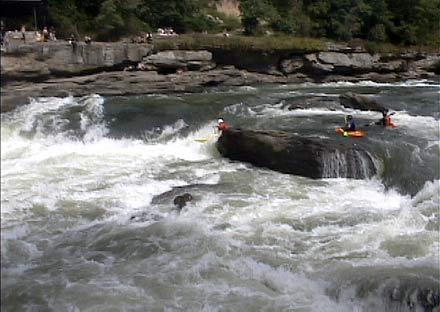
Think of Iron Ring as a huge wave train with big holes on both sides. The river crams itself into about 1/2 its normal size, and drops over 2 ledges, both about 5 feet, all in about a 50 foot distance. At low water the drop is distinctly broken into two drops and there are more exposed hazards. Many don't run this drop below 1500 cfs due to the pin hazards particularly along the left, although there are still plenty of boaters who do run it at lower flows (just make sure you understand the hazards and can make the moves). At levels above ~2000cfs the two ledges merge to form an enormous wave train.
It's important to know some history behind Iron Ring. Loggers in the early 1900's tried to blast part of it out to make a log flume. The Iron Ring that gave this rapid its name was part of the logging operation and set into the rocks. It was stolen in 1988. The result of the blasting activity is that part of the bedrock has broken off and is sitting at the bottom of the wave train. There is now a gap between the rock--known as Woodstock Rock--and the left bank. The danger is on the left side of Woodstock Rock where a narrow boat wide slot makes a 90 degree bend through a slot that is 2-3 feet wide and takes a 90-degree bend halfway through. This spot is most hazardous at low water where there is a signifcant risk of getting flushed into this channel, but it's underwater at fall release levels and relatively easy to sail right on by. Note that some of the eddies in the rock pile on the left bank have serious drains in them, especially at lower levels.
To run the drop, start from the river-left eddy, take a few paddle strokes (but make sure you get there) through some very small ledges/ holes to gain access to the main flow of the river. Hint: Look for two white holes coming off the left shore, the second further right than the first. Use these markers for your initial approach. Hit the right side of each hole and then You will see a large wave in the middle of the flow with a big V on it. You want to hit that V angling and paddling right, because the water on the left side of that wave is heading for Woodstock hole/rock. It's tempting to stay on the middle of the that wave, its so nice and smooth. Resist the temptation. However, it's a tightrope, because there is an ugly pourover on the river right, too. So, you don't want to be too far right. Also, the water on the far right slams up against the right wall. If you are on line, it will feel like a cool wave train. If you are too far left or too far right, you will get worked, but generally not for very long.
If you don't know the line, you should absolutely scout this rapid from the river left; it's very easy to do. This is particularly important during lower flows.
Location
Other Rapids on This Run (20)
 Rapid
N/A
Rapid
N/A
 Hazard
IV
Hazard
IV
 Rapid
III
Rapid
III
 Rapid
N/A
Rapid
N/A
 Rapid
III+
Rapid
III+
 Rapid
V
Rapid
V
 Rapid
III+
Rapid
III+
 Rapid
IV
Rapid
IV
 Rapid
IV+
Rapid
IV+
 Rapid
IV-
Rapid
IV-
 Rapid
III+
Rapid
III+
 Rapid
V
Rapid
V
 Rapid
IV+
Rapid
IV+
 Hazard
III
Hazard
III
 Rapid
III
Rapid
III
 Waterfall
IV
Waterfall
IV
 Rapid
N/A
Rapid
N/A
 Rapid
N/A
Rapid
N/A
 Rapid
III
Rapid
III
 Rapid
IV
Rapid
IV
Current Conditions
5-Day Forecast
American Whitewater